
Singapore is large in spirit and relentless in motion. With 8,300 people per square kilometer and nearly 100% urbanization, its six million residents across the city’s soaring skyline rely on elevators and escalators to keep life moving. When one stops, the city stumbles. That’s why KONE’s Innovation team calls its always-on operations the city’s “vertical nervous system”. Every signal from KONE equipment across the island feeds into a 24/7 control center, guiding the professionals who keep people flow steady and safe. In a city ranked top in Asia and fifth worldwide for smart-city readiness, that kind of responsiveness is expected.
Keeping the city running smoothly
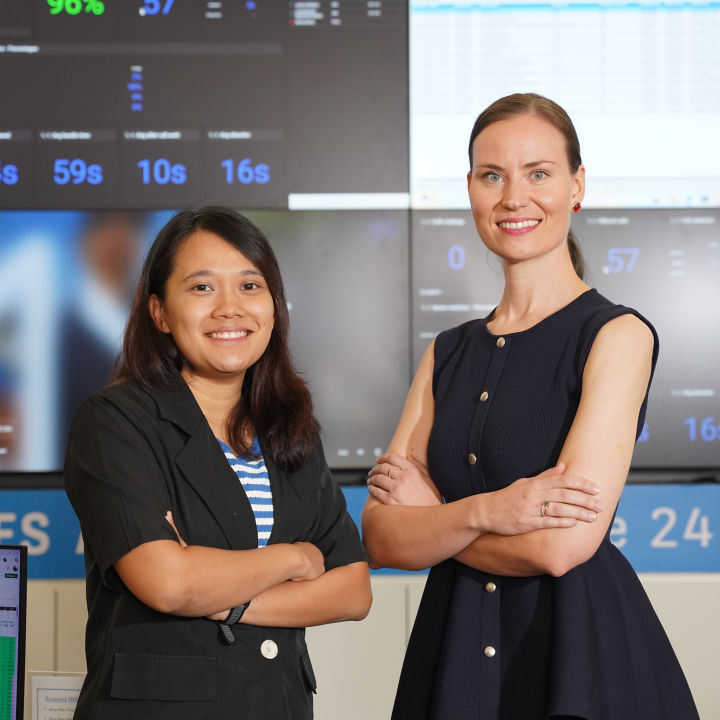
Behind every smooth commute and safe ride is a field technician who shows up when the city needs them most. They’re more than troubleshooters; they’re the first responders of the elevator and escalator world. Etti Seppä, head of innovation for Asia-Pacific, Middle East and Africa (APM) at KONE, explains: “Most of our employees are out in the field. They’re the ones who keep the city running. Our role is to make their work easier, safer, and faster.”
When a call comes in, every second counts. Thanks to Singapore’s high adoption of KONE 24/7 Connect, technicians get real-time insights before they arrive on site. Instead of guessing, they know which parts to bring and what issues to check. That readiness is boosted by the Technician Assistant, a generative artificial intelligence (GenAI) designed specifically to support field technicians.
“It’s like having a senior engineer with you on site,” says Nora Razak, APM’s business development manager for innovation. “Because the system recognizes the equipment, you can quickly search and form a clear hypothesis about what went wrong – and the tool suggests the right steps to diagnose and fix it.”
Etti describes it as “a digital buddy you carry everywhere – simple, intuitive, and designed for high-pressure environments.” Insights from the Singapore trials highlighted the need for a speech-to-text capability to make the tool more practical when both hands are busy. While this feature is not yet available, it’s included in the product roadmap for future development.
First responders on the ground
For Muaaz bin Samat, a maintenance technician with KONE Singapore, every alert is a call to action. “When the call comes,” he says, “I’m like a firefighter. I head straight to the site to fix the problem.” That urgency reflects the reality of vertical cities like Singapore, where a single outage can disrupt families, children, and people with limited mobility.
Supporting technicians like Muaaz is Dynamic Maintenance Planning (DMP) – a data-driven approach led locally by Ravi Jayaraman, who manages a team of ten technicians. Unlike traditional checklist-based maintenance, he notes that DMP continuously analyzes how each individual elevator is actually being used.
“If a door is overused,” Ravi explains, “DMP tells us to focus there.” The result is smoother operations and faster responses, with maintenance plans tailored to the specific needs of every asset. While DMP shapes what work needs to be prioritized across a portfolio, the Technician Assistant supports how technicians carry out that work in the field.
For Muaaz, the combination is powerful: DMP ensures the right maintenance focus ahead of time, while the Technician Assistant equips technicians on site with instant, actionable insight.
Technicians at the heart of a city
But the heart of this technology is human. The goal is clear: to assist technicians, not to replace them. Nora highlights this during co-creation: “We always tell the senior technicians that the innovations are here to assist. We want to support your work and eliminate the boring parts of your day. We also want to make field work attractive by adding digital capabilities that help us bring in younger talent.”
This approach also addresses a global challenge: an aging workforce and the urgent need to train new technicians quickly. By capturing decades of “silent knowledge” and embedding it into AI‑driven tools, KONE makes sure that hands‑on experience is preserved and paired with modern technology – without losing the human touch.
Technicians have played a crucial role in shaping these solutions. They were directly involved in pilot projects, including those in Singapore and Malaysia, where they provided feedback and suggestions to refine the tools. Indirectly, their daily field work – documented through maintenance histories, technical helpdesk cases, and other data – continues to inform and enrich the system.
Early results indicate impact: a 6% decrease in call-out rates and 30% fewer escalated cases, meaning technicians resolve more complex issues independently.
Digital solutions to enhance customer value
For customers, the benefits are clear: less downtime, smarter maintenance, and more confident service reviews. “If our reports look smarter, more data-driven, and our technicians sound confident, customers will be happier,” Nora notes.
These tools excel in older buildings, where documentation is often incomplete. Technician Assistant rapidly provides schematics and repair histories, filling in gaps to ensure smooth modernization programs. In newer assets, the same system integrates with building controls, enhancing people flow across portfolios.
And the horizon continues to expand. Etti emphasizes the bigger picture: “We’re looking at agentic AI, IoT (internet of things), robotics, immersive tech. The goal is impact – not just at the building level, but at the district and city level. Imagine elevators acting as sensors for an entire city.”
The scale makes the stakes real: across Singapore, there are about 79,000 elevators and 7,900 escalators, highlighting the importance of predictive maintenance and quick response in a dense, vertical city.
Smarter cities focused on people
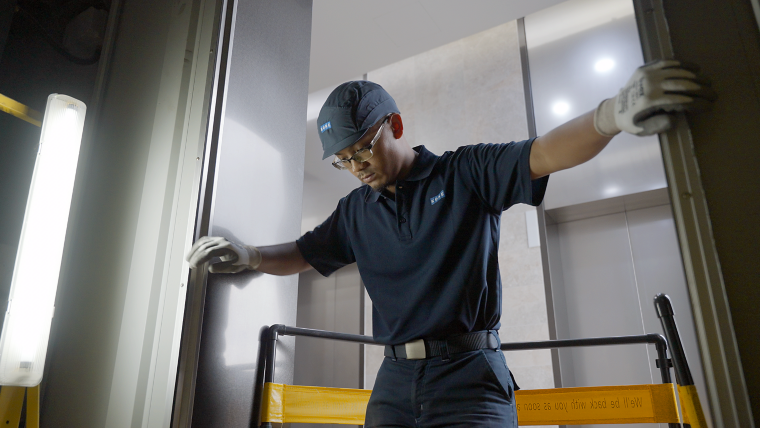
KONE’s innovation roadmap for APM extends beyond elevators. Projects include integrating elevator data into building management systems to improve HVAC (heating, ventilation, and air conditioning) energy efficiency, and piloting robotics to automate material movement on construction sites – enhancing safety and boosting overnight productivity.
For technicians, the future looks even more connected. Nora envisions a next-generation assistant that acts as a personal coach: “The AI will learn your style and suggest faster ways to work. Maybe one day, it’s integrated with autonomous tools – your augmented buddy on site.”
And for customers, the possibilities include sustainability. “Agentic AI can analyze door cycles, motor load, and recommend building-level adjustments – lower electricity bills, green certification credits, sustainability reporting,” Etti explains. These innovations align perfectly with Singapore’s sustainable building goals.
The story is simple, and it matters: Singapore moves because its vertical lifelines do. KONE’s first responders keep those lifelines functioning, and the innovation team supplies them with digital tools that make their jobs easier, safer, and faster – never unnecessary.
That results in less downtime, smarter upgrades, clearer reports, and service that feels like the city itself: efficient, human, and always active.